A foundry built around castings that must match a drawing
Anyone can pour steel. Matching someone else’s drawing, heat after heat, and being able to prove it afterwards is the part that takes a system.
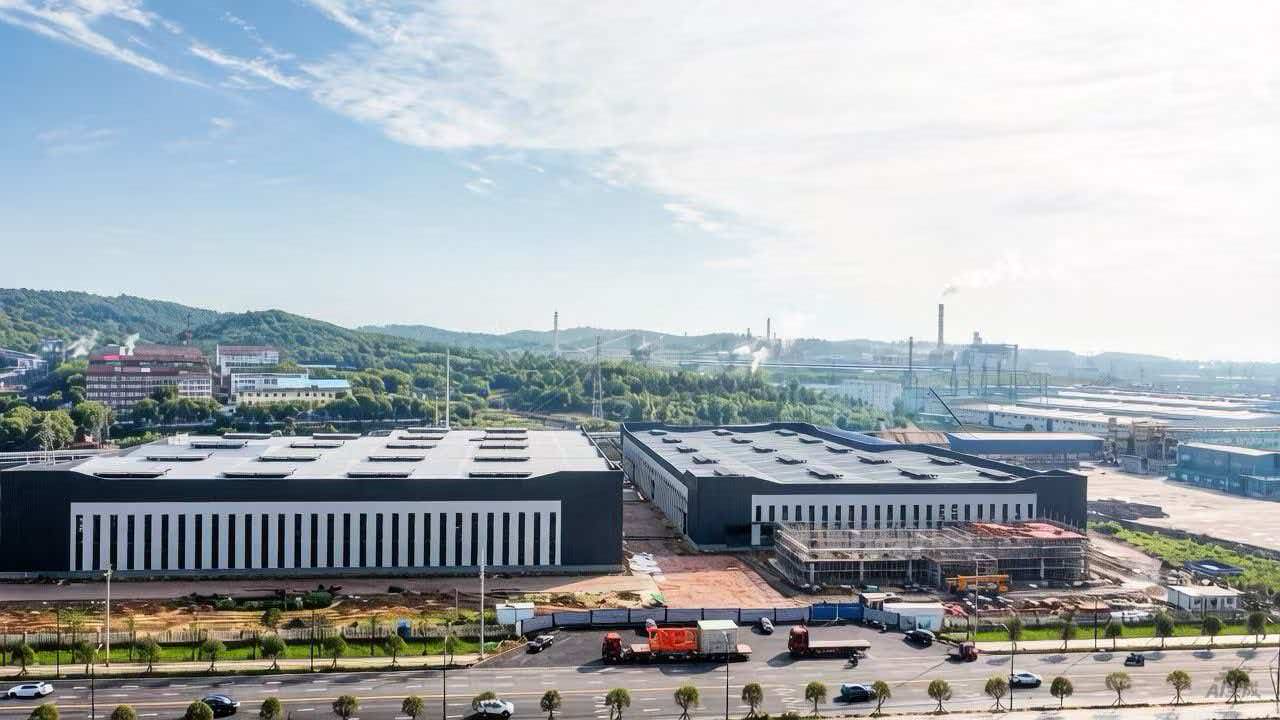
Five stages from drawing to crate
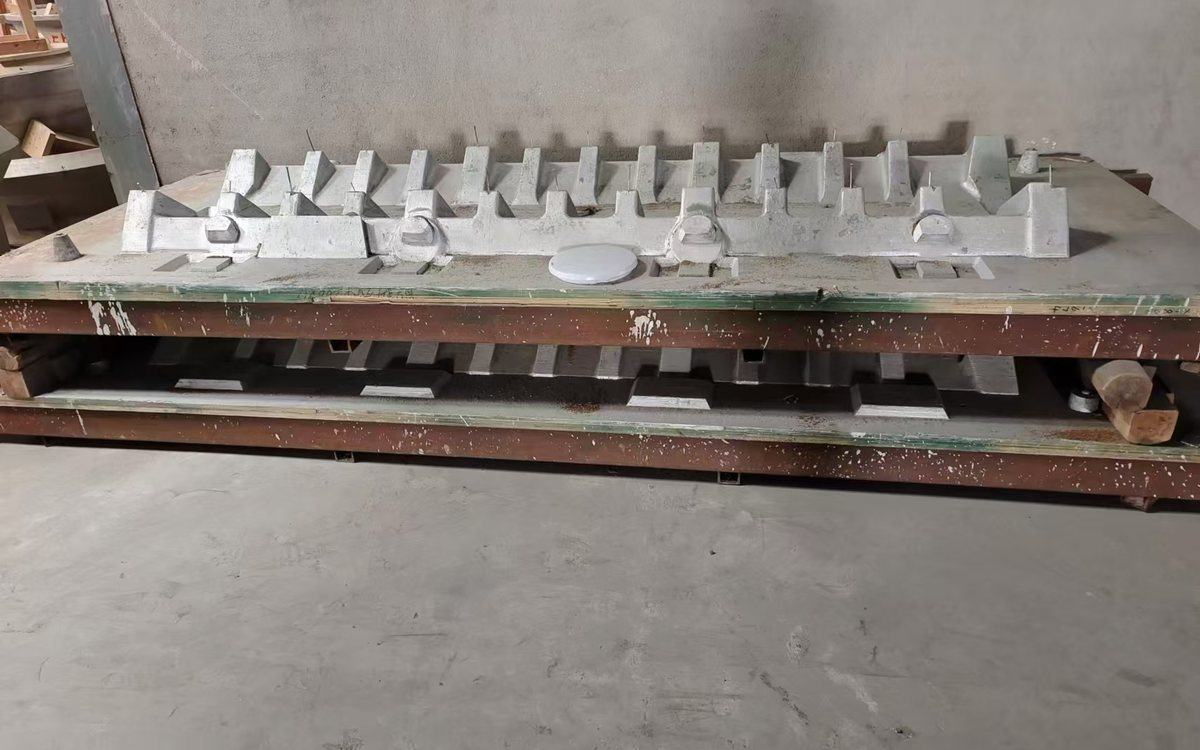
Pattern making
Patterns are produced from your drawing with shrinkage allowance applied for the specified grade, plus machining allowance on faces that will be machined. Wooden and metal patterns are both used depending on repeat quantity.
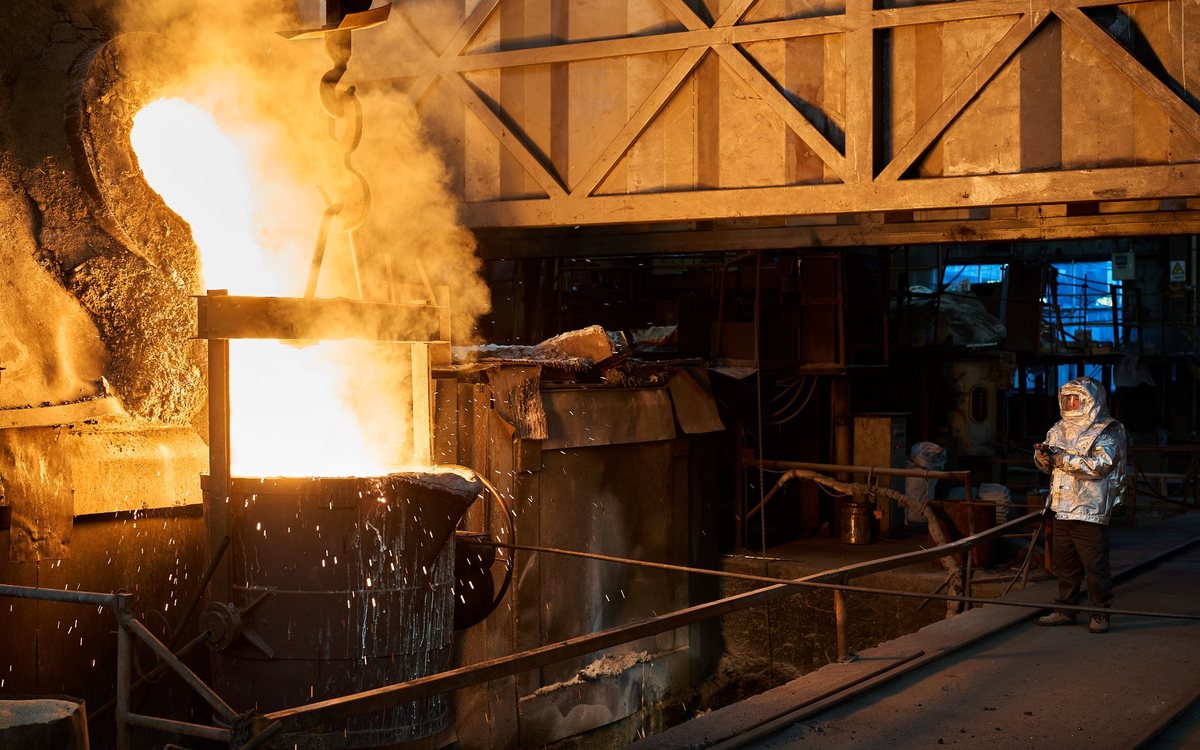
Melting & casting
Medium-frequency induction furnace melting with charge control. Chemistry is checked by spectrometer before the pour, and pouring temperature is controlled by grade to avoid gas and shrinkage defects.
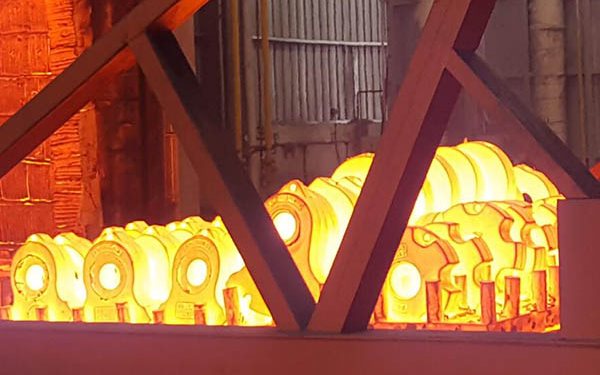
Heat treatment
Manganese grades go through water toughening; Cr-Mo grades through quench and temper. Every batch carries a furnace record, so the treatment behind each casting is documented.
Machining & finishing
Bolt holes, faces, fits and slots are machined or ground to drawing. Castings are cleaned, fettled and any surface defects dressed before inspection.
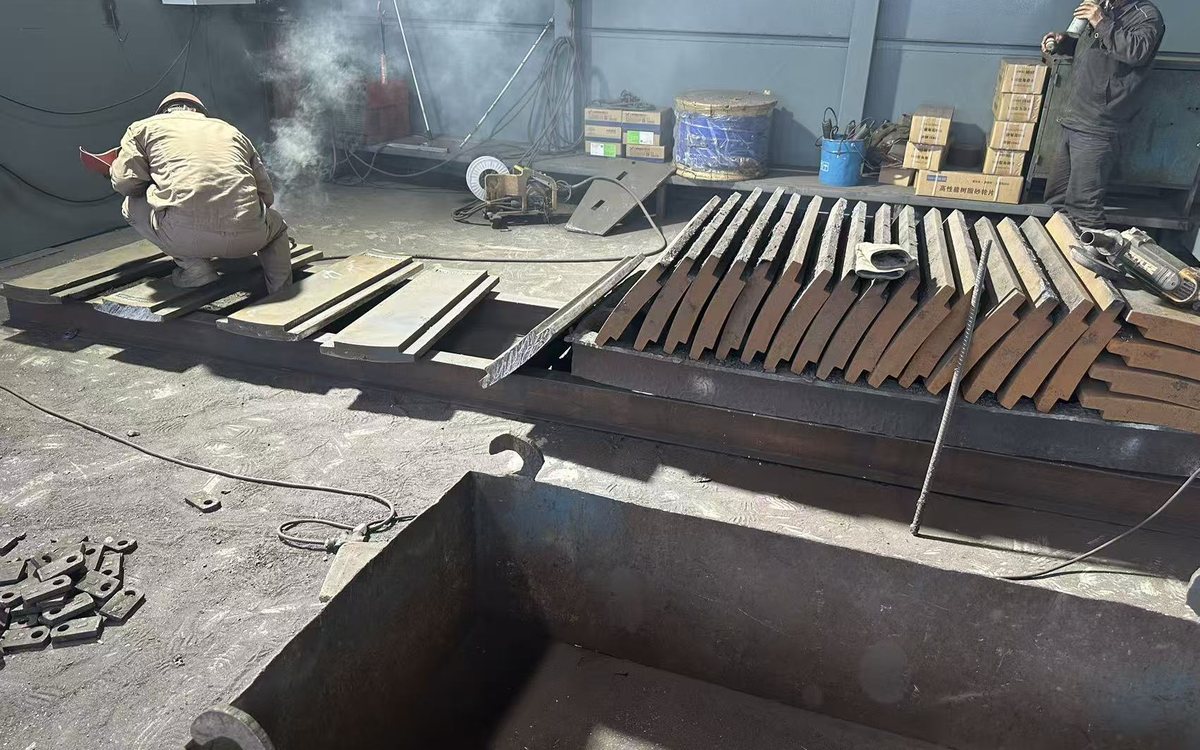
Inspection & despatch
Final dimensional check against the drawing, documentation compiled, castings marked with heat number and set position, then crated for shipment.
What the plant can do
Induction melting
Medium-frequency furnaces with charge control and spectrometer verification before every pour.
Heat treatment
Furnaces with recorded cycles — water toughening for manganese, quench and temper for Cr-Mo.
Machining
Boring, drilling, milling and grinding capability for faces, bores, slots and bolt holes.
Inspection
Spectrometer, hardness tester, metallographic microscope and dimensional inspection equipment.
Measured, recorded, handed over
Documentation that answers questions later
When a liner underperforms, the first question is always whether it matched the specification. Our paperwork is built to answer that without argument.
- Heat number marked on each casting and traceable to the spectrometer result
- Brinell hardness test results per batch
- Heat treatment furnace records
- Dimensional inspection report against your drawing
- Packing list tying every casting to its set position
- Certificates of conformity on request
Working within real limits
We would rather quote a lead time we can hold than win an order we cannot deliver on time.
Send us your drawing — get a quote within 24 hours
Upload DWG, PDF or STEP files. Our engineers review every drawing and come back with a technical reply and a firm quotation — no obligation.