Ball Mill Liners
Shell, head and grate liners for secondary and regrind ball mills — cast to your drawing in manganese or Cr-Mo steel, matched to the duty of each chamber.
Feed-end head liners, face to face
The feed-end head takes the first impact of ore and grinding media entering the mill. These are cast thick in manganese grades and machined to your bolt pattern — the drawing says the rest.
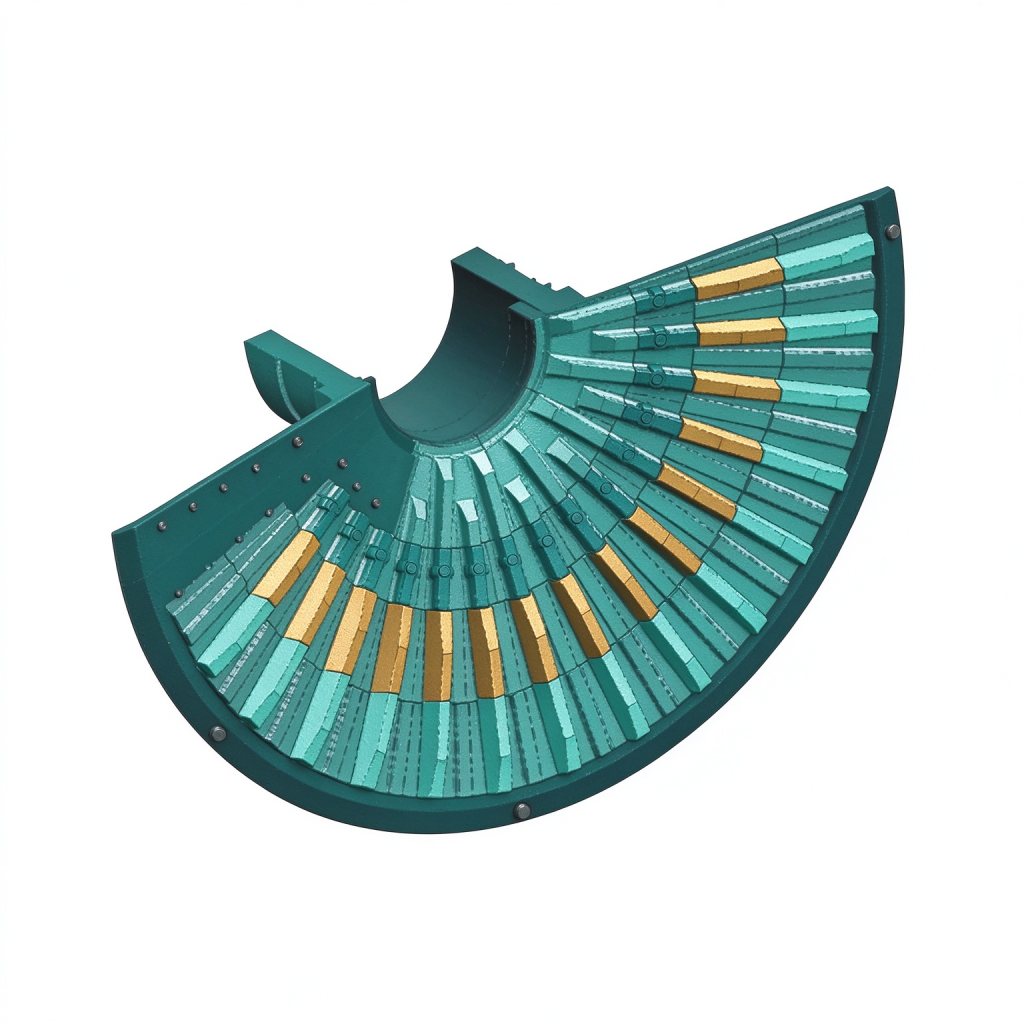
What the drawing calls out on this position
- Grade — Mn18 or Mn18Cr2 for feed-end duty
- Section thickness and rib pattern, per ring position
- Bolt hole pattern with counterbore, ±1.5 mm
- Machined seating face, ±0.5 mm
Send us the drawing for your feed-end heads — or any position — and we will quote the set.
What a ball liner has to survive
A ball mill liner set is not one product. The coarse chamber takes impact from large balls, the fine chamber is dominated by abrasion, and the discharge end sees slurry erosion on top of both. Liner life follows the material decision you make in each of those zones — which is why we cast to your drawing and let you specify per position.
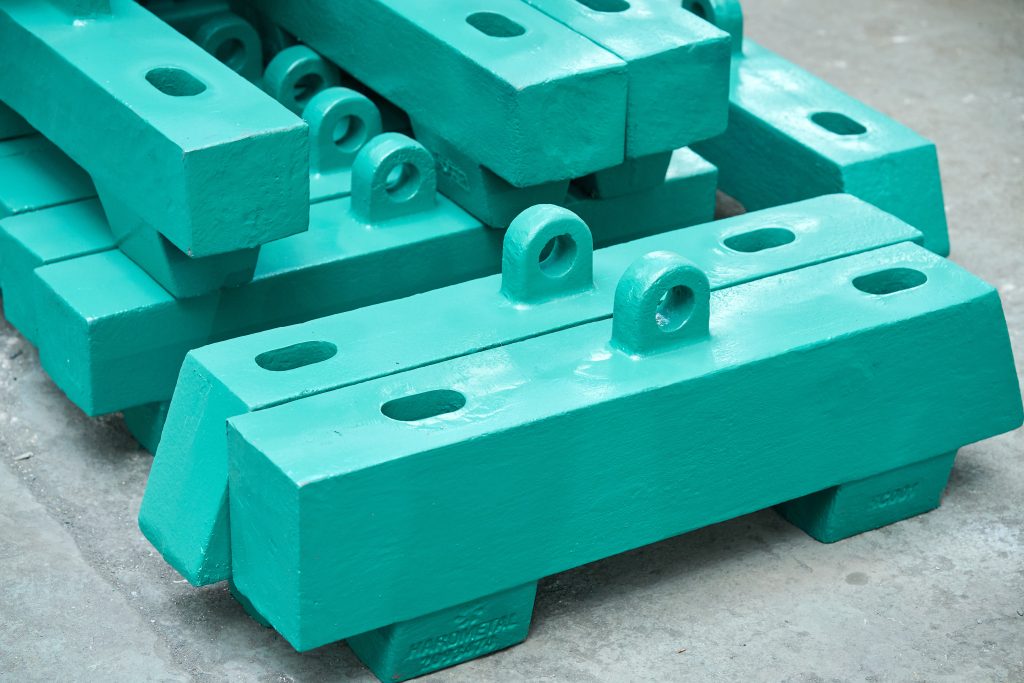
Where the wear actually comes from
Coarse chamber
Impact from 60–100 mm balls plus abrasion. Surface fatigue, cracking and metal flow are the usual first failures.
Fine chamber
Abrasion-dominated. Liners wear thin rather than break, so as-cast hardness matters more than toughness.
Discharge end
Slurry erosion combined with abrasion — grate slots open up and pulp lifters wear at the leading edge.
Feed end
Ore impact at the feed trunnion. Shock loading and cracking are common on under-tough grades.
Recommended material by position
In practice the right answer is usually a mix within the same mill. This table is a starting point — your drawing and your wear history decide the final call.
| Position | Dominant wear mechanism | Recommended material |
|---|---|---|
| Coarse chamber shell | Large balls, high impact | Mn18 / Mn18Cr2 |
| Fine chamber shell | Abrasive, low impact | Cr-Mo alloy steel |
| Feed-end head | Ore impact, shock | Mn13 / Mn18 |
| Discharge-end head | Impact + slurry erosion | Mn18Cr2 |
| Grate plates | Slurry erosion through slots | Cr-Mo / Mn18Cr2 |
| Lifter bars | Impact, occasional breakage | Mn13 / Mn18 |
The complete Ball liner package
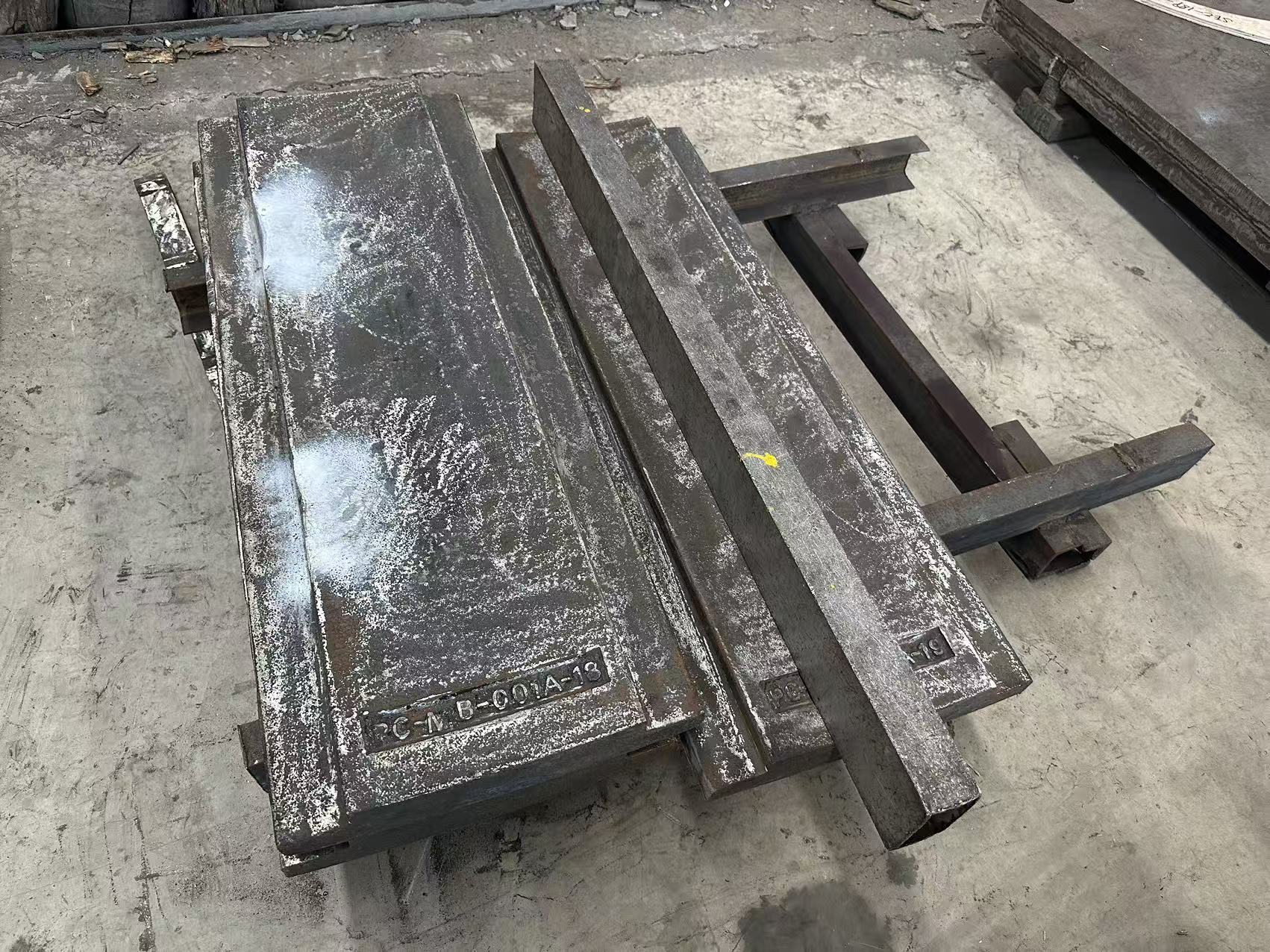
Typical manufacturing envelope
- Mill diameter1.5 – 6.0 m
- Liner thickness30 – 120 mm
- Single piece weight20 – 1,200 kg
- MaterialsMn13, Mn18, Mn18Cr2, Cr-Mo
- Bolt hole tolerance±1.5 mm
- Machined face tolerance±0.5 mm
If your liner falls outside the ranges above, send the drawing anyway — we will tell you honestly whether we can cast it and how.
Send your drawing — we do the rest
What we need from you
Send the drawing and we can quote. If any of the items below are missing we will tell you what is required before the pattern is cut — the earlier the question is asked, the cheaper the answer.
- 2D drawing (DWG or PDF) or a 3D model (STEP / IGES)
- Material grade and required hardness, if specified
- Quantity per position and whether a full set or part set
- Bolt hole pattern, bolt size and grade
- Mill make, model and diameter (helps us sanity-check the drawing)
- Current liner life, if you are replacing an existing set
From drawing to documented casting
Drawing review
We check the drawing for castability, confirm the material and flag anything that would cause a problem at the foundry — before a pattern is made.
Pattern and moulding
Pattern built to your drawing with the correct shrinkage allowance for the specified grade.
Melting, casting, heat treatment
Chemistry verified by spectrometer before pouring; heat treatment logged with furnace records.
Inspection and despatch
Dimensions verified against the drawing, documentation compiled, castings crated for shipment.
Common questions
How do I know whether to specify manganese or Cr-Mo?
It depends on the chamber. Manganese grades work-harden under impact and are the safer choice where balls fall on the liner. Cr-Mo holds a higher as-cast hardness and outlasts manganese where wear is abrasive and impact is light. In most ball mills the right answer is manganese in the coarse chamber and Cr-Mo in the fine chamber.
Can you match the liners I am running now?
Yes — send the drawing, and if you have it, the wear data from the current set. Knowing how the present liner failed tells us whether the material or the section profile should change.
Do you supply the bolts and washers?
Liner bolts, washers and sealing washers can be supplied with the liner set on request. Tell us the bolt standard you use and we will quote to it.
Can I visit the foundry before ordering?
Yes, and we would rather you did. Tell us when you plan to travel and we will arrange the visit in Dangyang, Hubei — including inspection records for orders already in production.
Send us your drawing — get a quote within 24 hours
Upload DWG, PDF or STEP files. Our engineers review every drawing and come back with a technical reply and a firm quotation — no obligation.